

Basic Self-Propelling Techniques for Manual Wheelchair Users
Learning how to self-propel efficiently is a key skill for anyone using a manual wheelchair and is something we often teach following wheelchair prescription. Small changes to how you grip the pushrim, apply force, and recover between pushes can make a big difference to comfort, fatigue, and long-term shoulder and hand health.
This blog covers the basic skills of self-propelling, focusing on simple techniques to help you move more smoothly and with less effort.
Hand Placement
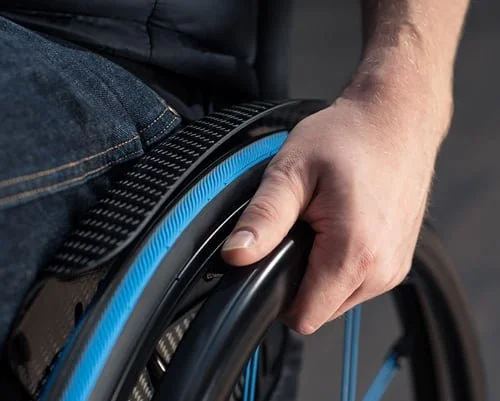
Your wrist should stay in a neutral position, in line with your forearm.
Place your thumb on top of the pushrim, running in line with the rim rather than wrapped underneath.
Aim for good contact through the palm/heel of your hand, as this is where most of the pushing force should come from.
Your fingers should rest loosely around the rim, not gripping tightly.
Arm Placement and Push Stroke
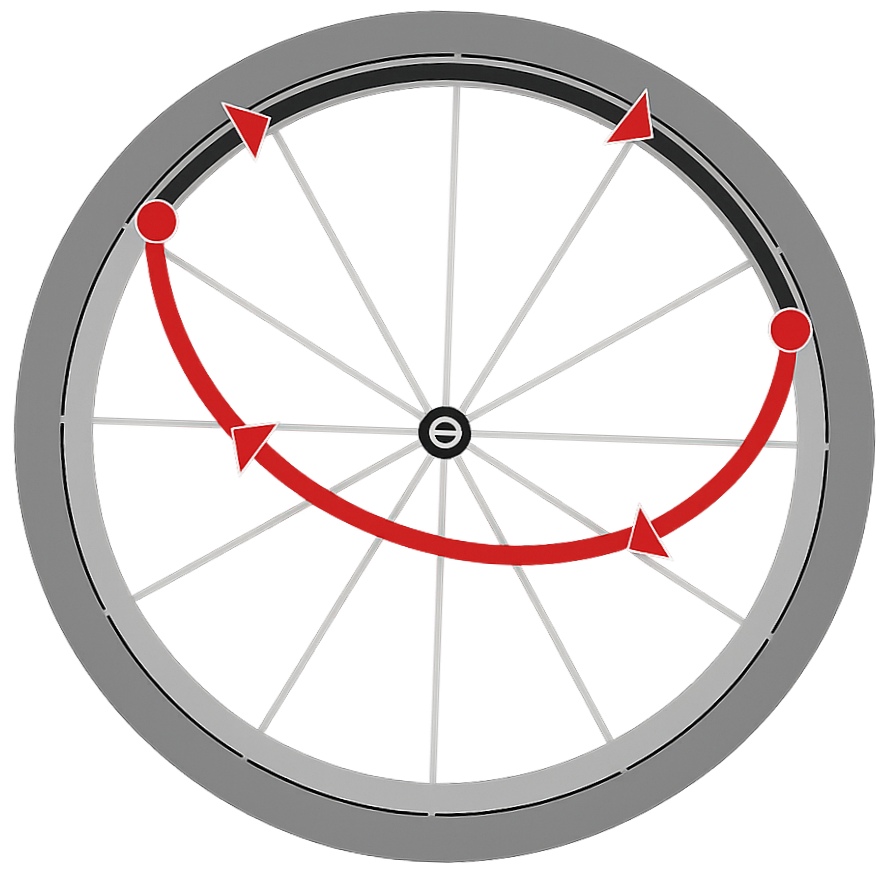
The push stroke is best thought of as an oval movement with two parts:
the active phase (black): where your hand is in contact with the pushrim and actively pushing
the recovery phase (red): where your hand lets go and follows the wheel’s momentum before smoothly reconnecting for the next push.
Your ideal push range depends on factors such as arm length, shoulder strength, seat height, and wheel position. As a general guide, if you imagine the wheel as a clock:
Contact often begins around 10–11 o’clock and finishes around 2–3 o’clock.
From 3 o’clock back to 10 o’clock is the recovery phase, where the hand stays off the rim and follows the wheel’s movement.
Using Momentum
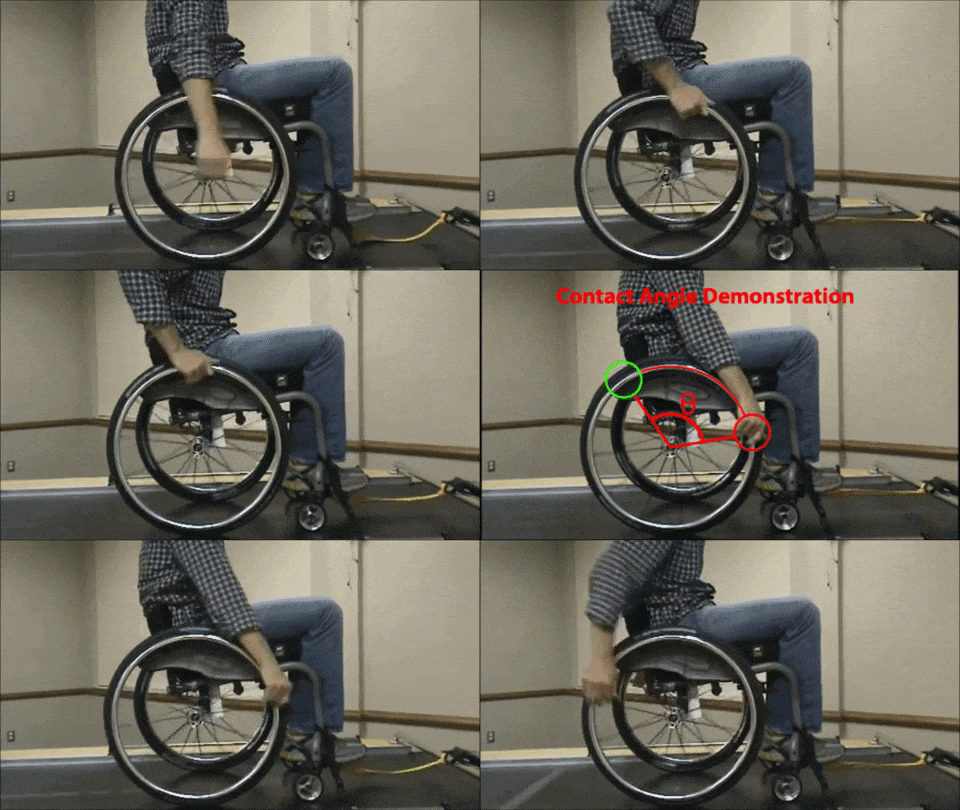
The goal is a long, controlled push, then letting momentum do the rest.
Think of this as moving with the wheel’s momentum, not fighting it.
Because your hand is already moving in the same direction as the wheel during recovery, less effort is needed to restart the next push.
This blog covers the fundamentals, but there are many additional skills that can be learned, such as:
managing slopes and ramps
reversing
opening doors
navigating uneven or complex environments
It’s also important to remember that wheelchair setup plays a significant role in how easy it is to self-propel. Seat height, wheel position, and axle placement all affect efficiency. Pushrims themselves can also make a big difference—there are many options available, offering different levels of grip, surface area, and control.
If you’d like coaching to develop these skills, a manual wheelchair setup review, or advice on pushrim options, feel free to get in touch.
Disclaimer: This information is general in nature and does not replace individual assessment or professional advice. Wheelchair setup and propulsion techniques should be tailored to each person. If you would like individualised support, please speak with an Occupational Therapist.
